TL;DR:
- Proper cleaning depends on floor finish, material, and usage, requiring tailored methods.
- Daily dusting and vacuuming prevent scratches and maintain floor integrity over time.
- Regular routine maintenance combined with periodic professional cleaning ensures lasting hygiene and floor health.
Keeping hard floors genuinely clean in a busy Glasgow home or commercial property is harder than it looks. Grit tracked in from outside scratches surfaces over time, moisture from mopping can warp boards, and the wrong cleaning product can strip a finish you spent good money on. With so many tools, sprays, and gadgets on the market, it is easy to feel overwhelmed about what actually works. This article cuts through the noise and gives you a clear, evidence-backed breakdown of the most effective hardfloor cleaning methods, matched to the surfaces and usage patterns most common in Scottish homes and businesses.
Table of Contents
- Key factors before choosing a hardfloor cleaning method
- Daily maintenance: Sweeping, dust mopping, and vacuuming
- Damp mopping: pH-neutral cleaning for different floors
- Deep cleaning and what to avoid on all hard floors
- Comparing hardfloor cleaning methods: What really works?
- Why consistency outweighs gadgets in hardfloor cleaning
- Keep your hard floors spotless with expert support
- Frequently asked questions
Key Takeaways
| Point | Details |
|---|---|
| Regular removal matters | Daily sweeping or vacuuming removes grit that can scratch and dull hard floors. |
| Damp mop safely | Lightly wrung microfibre mops and pH-neutral cleaners protect most floor surfaces without causing damage. |
| Avoid harsh chemicals | Vinegar, bleach, and excessive steam should not be used as they can harm floor finishes. |
| Professional deep clean occasionally | Periodic expert cleaning prolongs floor life and boosts hygiene, especially for busy properties. |
Key factors before choosing a hardfloor cleaning method
Before reaching for a mop or spray, it pays to understand what you are actually cleaning. Not all hard floors are the same, and the wrong method can cause lasting damage that is expensive to reverse.
The single most important distinction is between sealed and unsealed floors. Sealed floors, typically finished with polyurethane, form a protective layer on top of the wood or stone. Unsealed floors, finished with oil or wax, absorb cleaners directly into the material. As surface suitability guidance confirms, unsealed floors need drier, gentler methods because moisture penetrates the surface rather than sitting on top of it. Using a wet mop on an oiled oak floor, for example, can cause swelling and greying that no amount of buffing will fix.
Beyond finish type, consider these factors before settling on a routine:
- Foot traffic levels: A hallway in a letting property in the West End of Glasgow sees far more wear than a bedroom. High-traffic areas need daily attention.
- Pets and children: Muddy paws and sticky fingers mean more frequent cleaning, but also a need for child and pet-safe products.
- Floor material: Hardwood, laminate, vinyl, tile, and stone all have different tolerances for water, chemicals, and abrasion.
- Commercial vs. residential: A café or office in Glasgow city centre has hygiene obligations that go beyond what a domestic routine covers.
- Regular vs. deep cleaning: Daily maintenance and periodic deep cleaning serve different purposes and require different tools.
For hard floor cleaning in Glasgow, where wet weather means more dirt is tracked indoors, understanding your floor’s finish is especially important. The difference between sealed vs unsealed floors shapes every decision that follows.
Pro Tip: Before trying any new cleaner or method, test it on a small, hidden area first, such as inside a cupboard or behind a door. Wait 24 hours before proceeding across the full floor.
Daily maintenance: Sweeping, dust mopping, and vacuuming
The foundation of any hardfloor care routine is daily removal of loose dirt, grit, and dust. This step is not glamorous, but it is the one that prevents the most damage. Fine grit acts like sandpaper underfoot, and every footstep grinds it into the surface finish, creating micro-scratches that dull the floor over time.
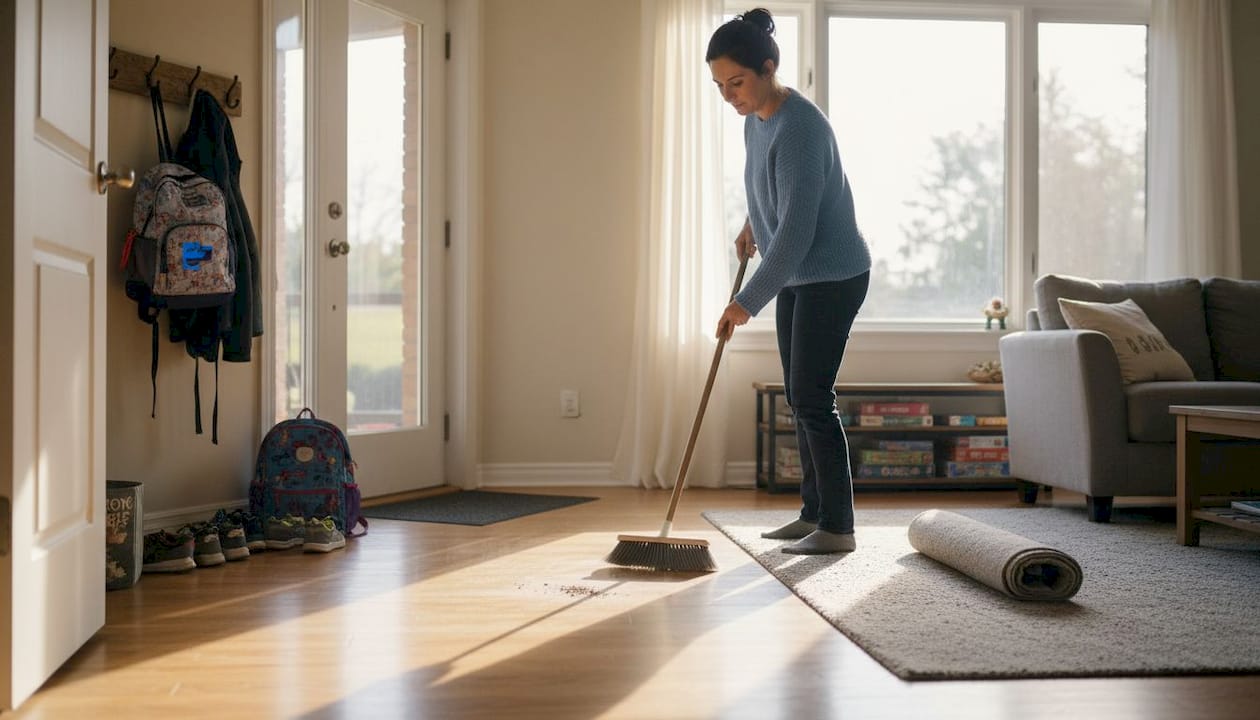
Removing grit and dust daily through dust mopping, sweeping, or vacuuming with a soft brush attachment is the recommended approach for hardwood and most other hard surfaces. The key word here is soft. Vacuums with beater bars or rotating brushes are designed for carpet and can scratch hard floors badly. Always switch to a hard floor setting or use a dedicated soft brush head.
Here is what works best for daily maintenance:
- Microfiber dust mop: Picks up fine particles without scattering them. Ideal for large open areas.
- Soft broom: Good for quick sweeps but less effective on fine dust, which tends to resettle.
- Soft brush vacuum: The most thorough option. Vacuum test results show that modern vacuums capture 99%+ debris on hard floors, while microfiber mops achieve 99.3% extraction of fine particles.
For high-traffic entrances, place a coarse-fibre mat outside and a softer mat inside to trap the bulk of incoming dirt before it reaches your floor. This one step makes a measurable difference. In homes with pets, a daily vacuum pass along skirting boards and under furniture edges catches the hair and dander that accumulates quickly.
For more expert hardfloor care tips tailored to Glasgow properties, it is worth understanding how daily routines connect to longer-term floor health and how often to clean hard floors to keep them looking their best year-round.
Damp mopping: pH-neutral cleaning for different floors
Once loose dirt is removed, damp mopping improves hygiene by lifting bonded grime and residues that dry methods leave behind. The word damp is doing a lot of work here. A soaking wet mop is one of the most common causes of floor damage in homes and rental properties alike.
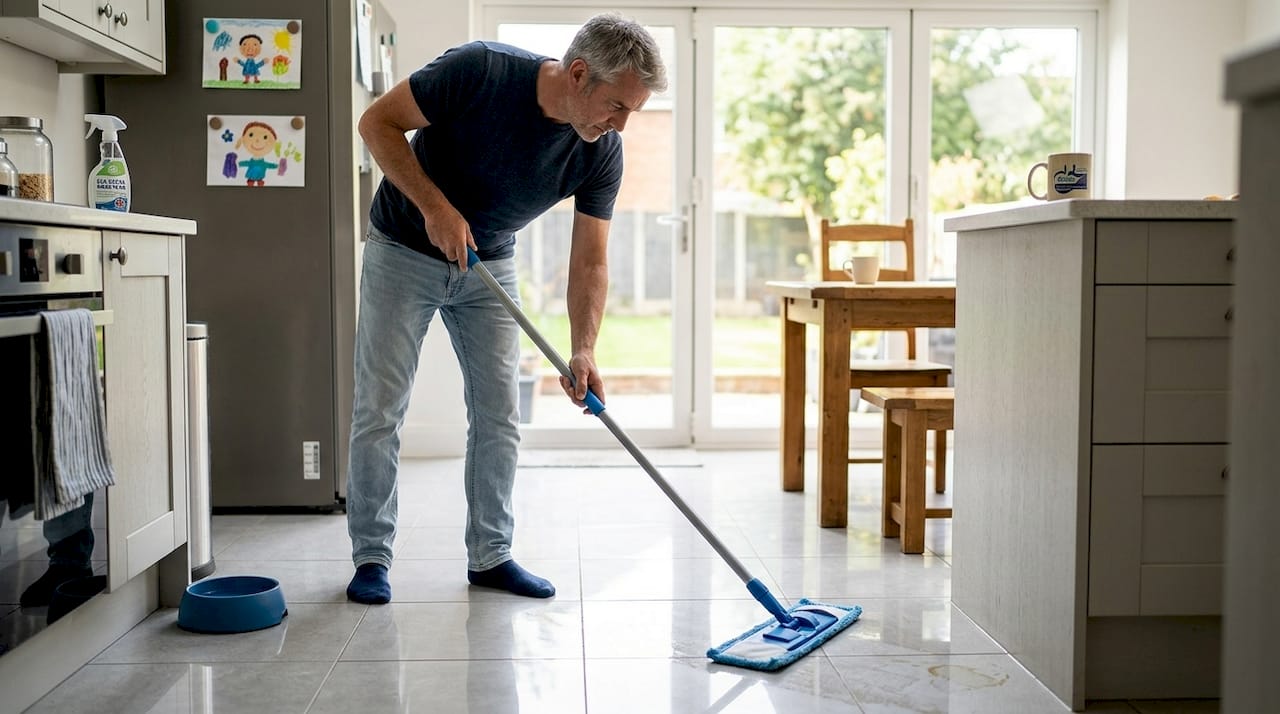
For hardwood, microfiber mop recommendations consistently point to a lightly wrung microfiber mop used with a pH-neutral cleaner or a small amount of dish soap in warm water. Dry the floor immediately after mopping. Leaving moisture to sit, even for a few minutes, risks warping and swelling in timber boards.
Here is a safe damp mopping process for most hard floors:
- Vacuum or dust mop first to remove loose grit.
- Fill a bucket with warm water and a small amount of pH-neutral cleaner.
- Wring the mop until it is barely damp, not wet.
- Mop in the direction of the boards or tiles.
- Dry the floor immediately with a clean, dry microfiber cloth or allow air circulation.
For vinyl and laminate, vinyl and laminate dos/don’ts are clear: sweep or vacuum daily, use only a light damp mop, and avoid excess water, steam, and abrasive cleaners, which cause swelling or dull the surface finish over time.
| Floor type | Recommended mop | Cleaner | Water level |
|---|---|---|---|
| Hardwood (sealed) | Microfiber flat mop | pH-neutral | Barely damp |
| Hardwood (oiled/wax) | Dry or barely damp cloth | Specialist oil-soap | Minimal |
| Vinyl | Microfiber or sponge mop | pH-neutral or mild | Lightly damp |
| Laminate | Microfiber flat mop | pH-neutral | Barely damp |
| Ceramic tile | Sponge or string mop | pH-neutral or tile cleaner | Moderately damp |
Pro Tip: Vinegar is often suggested as a natural cleaner, but it is mildly acidic and will dull polyurethane finishes over time. Stick to pH-neutral products and your floor’s finish will last significantly longer.
For more DIY cleaning tips for floors and guidance on when to use mopping vs professional cleaning, it is worth reviewing your floor type and usage before committing to a routine.
Deep cleaning and what to avoid on all hard floors
Even with a solid daily and weekly routine, hard floors accumulate residue, ground-in grime, and bacteria over time. Periodic deep cleaning addresses what regular maintenance cannot reach. However, deep cleaning done incorrectly causes more harm than good.
The most common mistakes are using too much water, applying steam to wood floors, and reaching for bleach or abrasive scrubbers. Universal don’ts for all hard floors include excess water, steam on timber, vinegar, oil soap on polyurethane finishes, abrasive pads, and bleach-based products. These damage finishes, cause warping, or leave a dull residue that attracts more dirt.
“Entry mats and a no-shoes policy are two of the most effective and underrated strategies for floor protection. Mats reduce 80% dirt entry, which means less cleaning, less wear, and a longer-lasting finish.”
For deep cleaning, here are the universal guidelines:
- Remove all furniture before starting.
- Vacuum thoroughly, including edges and corners.
- Use a manufacturer-approved deep cleaner for your specific floor type.
- Work in small sections and dry as you go.
- Never use a steam mop on hardwood. While steam kills 99.9% bacteria on hard surfaces, the heat and moisture penetrate timber and cause irreversible damage.
- For tile and stone, a grout brush with a mild alkaline cleaner is safe and effective.
For cleaning advice on delicate fibres and surfaces, the same principle applies: match the method to the material, not the other way around. Professional deep cleaning every six to twelve months is a sensible benchmark for busy homes and commercial properties, particularly in Glasgow where wet footwear is a near-daily reality.
Comparing hardfloor cleaning methods: What really works?
With the main approaches covered, it helps to see them side by side. No single method does everything. The best results come from layering daily, weekly, and periodic deep cleaning in a consistent routine.
| Method | Frequency | Effectiveness | Floor safety | Hygiene impact |
|---|---|---|---|---|
| Dry sweep/dust mop | Daily | High for loose dirt | Excellent | Moderate |
| Soft brush vacuum | Daily | Very high for debris | Excellent | Moderate to high |
| Damp mopping | Weekly | High for bonded grime | Good if done correctly | High |
| Deep cleaning | Every 1-6 months | Very high | Moderate risk if DIY | Very high |
| Professional cleaning | Annually or as needed | Highest | Excellent | Highest |
As findings on cleaning benchmarks from Consumer Reports suggest, no DIY method guarantees sterility. Regular maintenance combined with professional services is the most reliable approach for achieving and maintaining genuine hygiene and air quality standards in both homes and commercial settings.
Top three methods and their best-fit situations:
- Daily vacuuming with a soft brush: Best for homes with pets, children, or high foot traffic.
- Weekly damp mopping with pH-neutral cleaner: Best for maintaining hygiene between deep cleans on sealed floors.
- Periodic professional deep cleaning: Best for end-of-tenancy handovers, post-renovation clean-ups, and commercial properties with strict hygiene requirements.
Why consistency outweighs gadgets in hardfloor cleaning
After years of working in Glasgow homes and commercial properties, we have seen every cleaning trend come and go. Robotic mops, ionic steam cleaners, ultrasonic scrubbers. Some are genuinely useful. Most are expensive solutions to problems that a £15 microfiber mop and a consistent routine would solve just as well.
The uncomfortable truth is that the biggest predictor of floor condition is not the equipment used but the frequency and care of the routine. A floor cleaned properly three times a week with basic tools will outlast and outshine one cleaned occasionally with a high-end gadget. Glasgow’s wet climate means more mud, more moisture, and more tracked-in grit than many other parts of the UK. That environment rewards consistency above everything else.
High-pressure steam is a good example of a tool that sounds impressive but causes real problems on the timber floors common in Glasgow’s older tenement flats and Victorian terraces. The heat forces moisture into joints and boards, and the damage often only becomes visible months later as warping or discolouration.
Pro Tip: Set a recurring weekly reminder on your phone for your mopping day. It takes thirty seconds to set up and removes the mental effort of remembering. Consistency is a system, not a motivation.
For Glasgow-specific cleaning routines that account for local weather, floor types, and property styles, a tailored approach always beats a generic one.
Keep your hard floors spotless with expert support
Sometimes a regular routine is not enough. Stubborn stains, ground-in grime, or the demands of an end-of-tenancy clean require a level of thoroughness that goes beyond what daily maintenance can deliver.

At I Care Cleaning Services, our trained technicians bring 15+ years of experience to hard floor cleaning services Glasgow across the city and surrounding areas. We use eco-friendly, child and pet-safe products matched to your specific floor type, so you get a deep clean without the risk of damage. Whether you need a one-off deep clean or reliable end of tenancy hardfloor cleaning, we make the process straightforward, fast, and backed by our 100% satisfaction guarantee.
Frequently asked questions
What is the safest way to clean hardwood floors without causing damage?
Use a lightly wrung microfiber mop with a pH-neutral cleaner, and dry the floor immediately afterwards to prevent moisture from penetrating the boards and causing warping.
Can I use steam mops on all hard floors?
No. While steam kills 99.9% of bacteria on hard surfaces, it should never be used on hardwood floors as the heat and moisture risk serious warping and long-term structural damage.
How often should hard floors be cleaned to maintain hygiene?
For best results, sweep or vacuum daily to remove grit and debris, mop weekly with a pH-neutral cleaner, and schedule a professional deep clean every six to twelve months depending on traffic levels.
What cleaning products and methods should be avoided on hard floors?
Avoid excess water, steam on timber, vinegar, oil soap on polyurethane finishes, abrasive scrubbers, and bleach. These dull finishes and cause warping or surface damage that is difficult and costly to repair.
Recommended
- Hard Floor Cleaning in Glasgow | I Care Cleaning Services
- Top Carpet Cleaning Tips & Tricks: DIY Methods With Professional Results — I-Care Cleaning Services
- Self-cleaning carpets vs professional Residential Carpet Cleaning — I-Care Cleaning Services
- self-cleaning-carpets-vs-professional-residential-carpet-cleaning — I-Care Cleaning Services